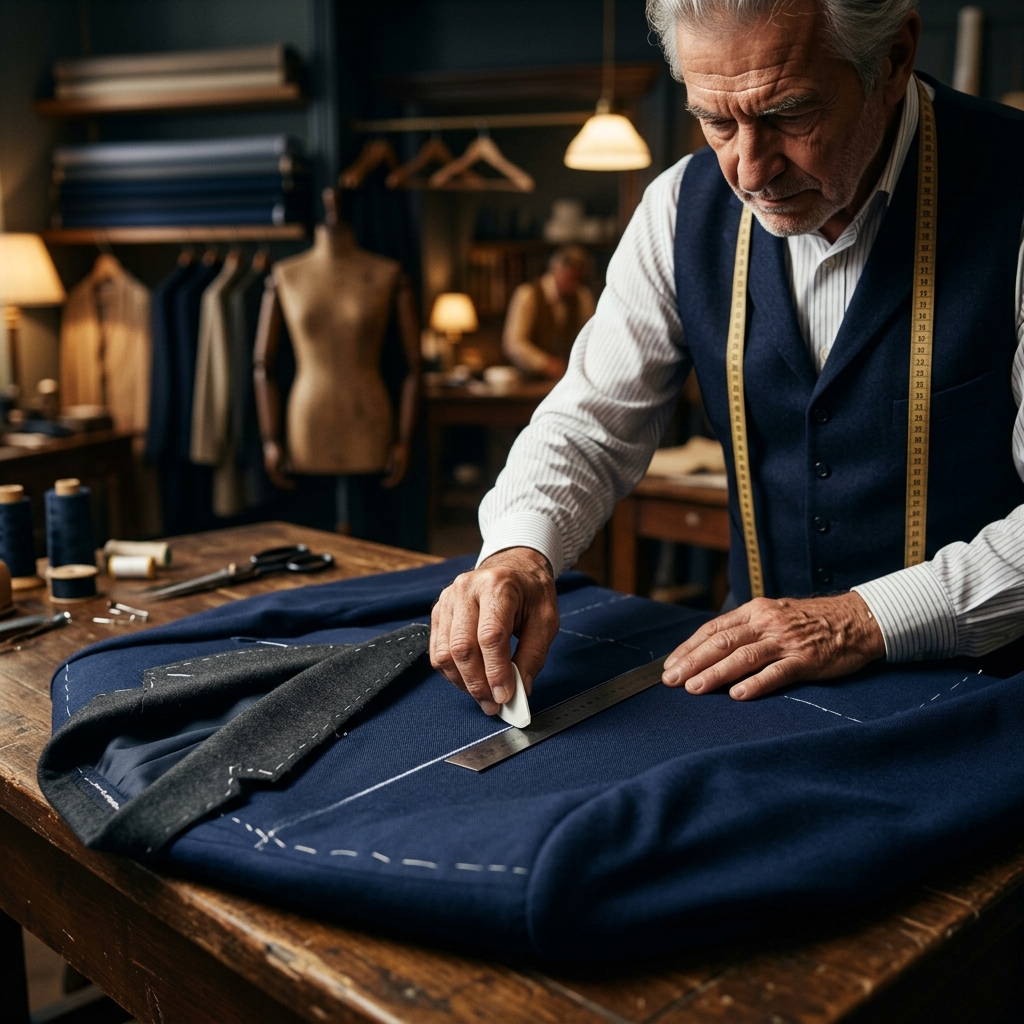
A bespoke suit is an investment in your personal brand. Yet, even with the finest fabrics in the world, a lack of attention to structural detail can lead to costly tailoring mistakes that compromise your appearance. At Tanbir Style Zone, we believe that education is the first step toward sartorial excellence. Having dressed the most distinguished gentlemen of Kolkata since 1998, we have identified the recurring errors that separate an amateur garment from a masterfully crafted bespoke commission.
The most common tailoring mistakes to avoid include selecting the wrong fabric for the local climate, prioritizing a tight fit over a tailored silhouette, and neglecting the internal canvas structure of the jacket. Structural errors like improper shoulder alignment and incorrect sleeve pitch are the primary causes of unsightly ripples and poor drape, which cannot be easily fixed once the garment is finished.
1. The 'Tight' vs. 'Tailored' Paradox
In the age of slim-fit trends, many men mistakenly believe that a suit should be as tight as possible. This is perhaps the most frequent common tailoring mistake we see in Kolkata. A truly tailored suit is not tight; it is precise. It should skim your body, following your natural lines while providing enough 'ease' for you to move, sit, and breathe comfortably.
When a jacket is too tight, you will see an 'X' shaped tension mark radiating from the button. This not only looks unprofessional but also puts immense strain on the fabric and seams, drastically reducing the lifespan of your bespoke suit. Trousers that are too tight at the thigh will 'smile' (create horizontal pull lines), which ruins the vertical line of the leg. At our Nagerbazar atelier, we focus on the 'drape'—ensuring the fabric falls cleanly from the shoulder to the hem, creating a silhouette that looks effortless rather than forced.
This balance is especially critical in Kolkata's humidity. A suit with zero ease becomes a heat trap, whereas a properly tailored garment allows for subtle airflow between the fabric and the skin, keeping you cool during a long wedding ceremony or a high-stakes board meeting.
2. Fabric Faux Pas: Ignoring the Kolkata Climate
Luxury is often equated with weight, but in a tropical city like Kolkata, choosing a heavy 14oz wool for a year-round suit is a significant mistake. A common error is selecting fabric based purely on its 'Super' number (like Super 150s) without considering the weave. While a high thread count feels soft, it can be delicate and prone to wrinkling in high humidity.
The mistake lies in not choosing 'High-Twist' or open-weave fabrics for our local weather. At Tanbir Style Zone, we guide our clients toward fresco wools, linen blends, and silk-mohair mixes. These fabrics provide the crisp structure of a formal suit while maintaining maximum breathability. Avoid synthetic linings like polyester at all costs; they act like a plastic bag, trapping heat and moisture. A master tailor will always insist on Bemberg or cupro linings, which are breathable, anti-static, and feel like silk against the skin.
Furthermore, color choice is often mismanaged. While black is a safe choice, it can appear harsh under the bright Indian sun. A deep navy or a rich charcoal provides a much more versatile and sophisticated look, and these colors tend to age more gracefully over years of wear.
Structural Comparison: Quality vs. Mistake
Identifying the internal quality of a suit is difficult for the untrained eye. Here is how bespoke tailoring at Tanbir Style Zone avoids the common traps of industrial production:
| Feature | Common Tailoring Mistake | Bespoke Standard (Tanbir SZ) |
|---|---|---|
| Internal Structure | Fused (Glued) Interlining | Full Floating Horsehair Canvas |
| Shoulder Padding | Thick, Blocky Foam Pads | Soft, Hand-Layered Cotton/Wool |
| Sleeve Attachment | Standard Machine Stitch | Hand-Set with Postural Rotation |
| Buttonholes | Imitation / Frayed Machine Holes | Functional, Hand-Sewn 'Milanese' |
| Pocket Finish | Puckered Seams / Glue Residue | Hand-Finished, Reinforced D-Tacks |
3. The Shoulder: The Anchor of the Suit
If you get the shoulder wrong, the rest of the suit is irrelevant. A very common tailoring mistake to avoid is an overhang or a 'divot' at the shoulder head. This happens when the shoulder of the jacket is wider than your actual shoulder bone, causing the fabric to collapse inward. Conversely, if it is too narrow, you will see the shoulder bone bulging against the sleeve.
The shoulder is the most complex part of the jacket's architecture. It involves the interaction of the front panel, the back panel, the sleeve, and the internal canvas. At our Kolkata atelier, we spend a significant portion of the measurement and fitting process ensuring the shoulder alignment is perfect. We account for 'slope' (how much your shoulders angle down) and 'forward pitch' (how much your shoulders roll forward). By hand-padding the internal canvas, we can even correct for natural asymmetries, making your posture look more balanced and commanding.
Remember, while sleeves and waists can be adjusted relatively easily, altering a shoulder is a major surgical operation for a garment and often costs more than it is worth. It is vital to get this foundation right during the first construction phase.
4. Neglecting the 'Hardware' and Finishing
Even the most expensive fabric can be cheapened by poor finishing. A frequent mistake is the use of plastic buttons on a luxury suit. True bespoke tailoring demands horn, corozo, or mother-of-pearl buttons. These materials are not only more durable but also develop a beautiful patina over time, adding to the garment's character.
Another error is the 'imitation' buttonhole on the sleeve. In a high-end commission, 'working' or 'surgeon's' cuffs are a hallmark of quality. While they were historically functional (allowing surgeons to roll up their sleeves), today they are a sign that the garment was made specifically for you, as the buttonholes can only be cut once the sleeve length is finalized. At Tanbir Style Zone, we offer hand-sewn Milanese buttonholes, which require hours of meticulous threadwork and serve as a silent signature of bespoke excellence.
Finally, avoid 'puddling' at the ankles. In the dusty streets of Kolkata, a heavy trouser break (where the fabric folds multiple times over the shoe) is a mistake. It looks sloppy and collects grime. We recommend a 'slight break' or a 'no-break' look, which maintains a sharp, vertical line and keeps your trousers looking pristine for longer.
Avoid Costly Tailoring Mistakes
Don't settle for 'close enough.' Let Tanbir Alam craft a garment that respects your form and the Kolkata climate.
The 4-Step Sartorial Audit
When you receive your next commission, use this professional audit to ensure you have avoided the most common pitfalls of the trade.
Step 1: The Collar Gap Check
Stand in your natural posture. The jacket collar should sit snugly against your shirt collar with no gap in between. If there is a gap (the 'hovering collar'), it indicates that the back-neck balance is wrong. This is a common mistake in off-the-rack and poor custom suits that makes the wearer look like the suit doesn't belong to them.
Step 2: Shoulder Alignment Verification
The seam where the sleeve meets the shoulder should end exactly at your natural shoulder bone. Press your finger against the seam; if you feel only fabric and no bone for more than half an inch, the jacket is too wide. If the seam sits on top of your shoulder, it is too narrow. Precision here is the mark of a master.
Step 3: The Mid-Section Tension Test
Fasten the jacket's top button. You should be able to slide a flat hand comfortably between your chest and the jacket, but not a fist. If the lapels start to 'bow' out or the fabric pulls into an 'X', the jacket is too tight. A bespoke jacket should have a 'waist' without feeling like a corset.
Step 4: The Sleeve and Cuff Harmony
Your jacket sleeve should end precisely at the large bone of your wrist. This allows half an inch of your shirt cuff to show. Showing too much cuff looks like the suit is too small; showing no cuff looks like you are wearing your father's jacket. This 'linen rule' is the golden ratio of menswear.
"The biggest mistake I see isn't a measurement error—it's a lack of honesty. Clients often try to stand too straight or hold their breath during a fitting. My job in Nagerbazar is to catch them when they relax. A suit must look good when you are standing still, but it must look magnificent when you are actually living your life. Perfection in tailoring is the absence of distractions; when a suit fits, people look at your face, not your clothes."
— Tanbir Alam, Master Tailor (27+ Years Expertise)
Conclusion: The Path to a Flawless Silhouette
Avoiding common tailoring mistakes is not just about vanity; it is about respecting the craft and your investment. A suit made without these errors will not only look better but will also be more comfortable and durable. In the humid climate of Kolkata, these small details become the difference between a garment that serves you and one that hinders you.
At Tanbir Style Zone, our 27-year heritage is built on the pursuit of this perfection. We invite you to visit our Nagerbazar atelier, where we can audit your current wardrobe or begin the journey of creating your first true bespoke masterpiece. Discover the confidence that comes from a garment that has been crafted with an absolute refusal to compromise on detail. To learn more about our philosophy, explore our guide to luxury custom suits or book your fitting today.
Frequently Asked Questions
In true bespoke tailoring, we always leave 'inlays'—extra fabric hidden inside the seams—precisely so the garment can be let out if you gain weight or want a more relaxed fit. However, ready-to-wear and cheap custom suits often have zero inlays, making it impossible to loosen them. This is why starting with a quality bespoke foundation is so important.
This is called a 'collar gap.' It usually happens because the jacket was cut for a standard upright posture, but you might have a slightly forward-leaning posture or a more prominent upper back. In bespoke tailoring, we measure the 'back balance' specifically to ensure the collar stays anchored to your neck at all times.
Try the 'pinch test.' Pinch the fabric near the chest button, pulling the outer layer away from the inner lining. If you feel a third, floating layer in the middle, it's a canvas. If it feels like two layers glued together, it's fused. Fused suits often develop 'bubbles' after dry cleaning, which is a mistake that ruins a luxury fabric.
Trends like ultra-skinny lapels or very short jackets are fleeting. A bespoke suit should be timeless. We recommend following classic proportions (like a lapel width that is half the distance to your shoulder) which will look as good in 10 years as it does today. True style is about what flatters your body, not what is on the runway this month.
Beyond aesthetics, hand-sewn buttonholes are more flexible. Machine-made holes are rigid and can tear the surrounding fabric over time. Hand-worked holes use a silk twist that provides a slight 'give,' protecting the fabric and ensuring the button stays secure for decades. It's a small detail that indicates a lack of compromise in construction.
Experience the Bespoke Difference
Avoid the traps of mass-market tailoring. Visit Tanbir Style Zone for a masterclass in fit and finish.